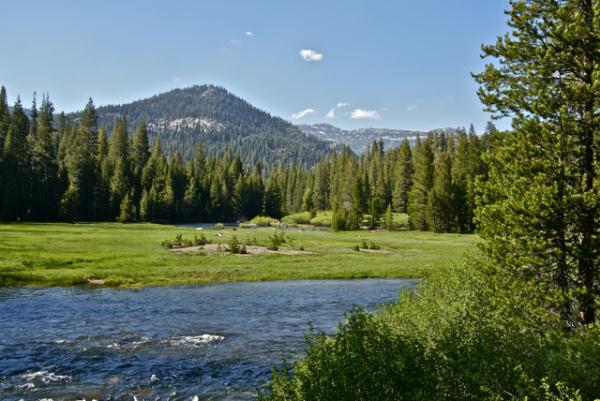
Showing posts with label earthcache. Show all posts

Wednesday, July 21, 2010

Rainbow Falls

A friend of mine, who I introduced to geocaching, described geocaching as "Hiking with a purpose."  I would respectfully have to disagree with him.  I guess it's probably because I grew up with camping and hiking.  My first camping trip (to Yosemite National Park) was with my parents when I was four years old.  Everywhere we camped, we hiked.  If you didn't want to hike, you stayed in camp, unless Mom decided to go on a hike too, which was many the time, so we learned to hike.

When we go camping today, we hike.  If it weren't for geocaching, we'd still hike, but I think geocaching has expanded those hikes to new and different places.  As a travel enthusiast, I like to take new roads when I go somewhere.  Driving the same road, back and forth to the same locale isn't what I'd like to do, although I know people who enjoy that.  It's just not for me.

That's probably why we end up going to so many different spots when we camp.  Camping in the same place is OK, but different locales afford us new and different experiences.  And, obviously, it also gives us more chances to geocache.  The hiking aspect of geocaching comes into play, but it's not the reason we geocache, nor is geocaching the reason we hike.  We hike, because we like to be outdoors.  I like to watch the scenery go by.

When we hiked to Rainbow Falls south of Devils Postpile, we took the shuttle bus from our campground to the trail head.  We could have just hiked from the campground up and back, but that would have been the same route.  We also had other things to accomplish that day, so by taking the shuttle to the trail head, it shortened what would have been a five mile round trip hike into a 3.8 mile hike.  It was still a significant hike, but a little less strenuous and thus gave our legs a little more energy for later in the day.

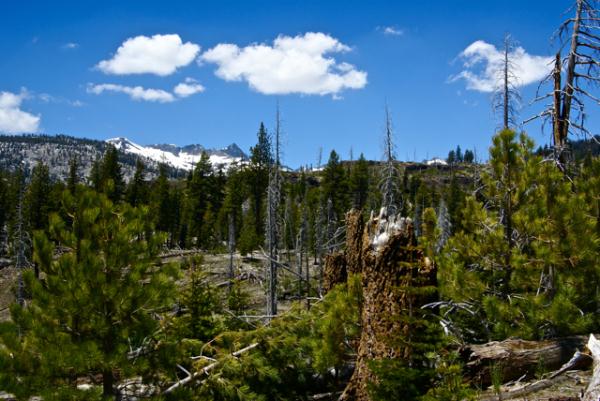
The hike down to the falls took us through a major burn area from a lightning strike fire that started at the southern end of the park and burned through a major part of the park in 1992.  The area, almost 20 years beyond that fire still shows the scars but is slowly rebounding.  There were many old snags standing as sentinels over the landscape and just as many fallen trees.  We could see evidence on the downed logs of recent bear activity as the bears looked for grubs and termites in their quest for food.  The animals were helping with the decomposition, which was further enhancing the soil, allowing the new growth of plants to flourish.

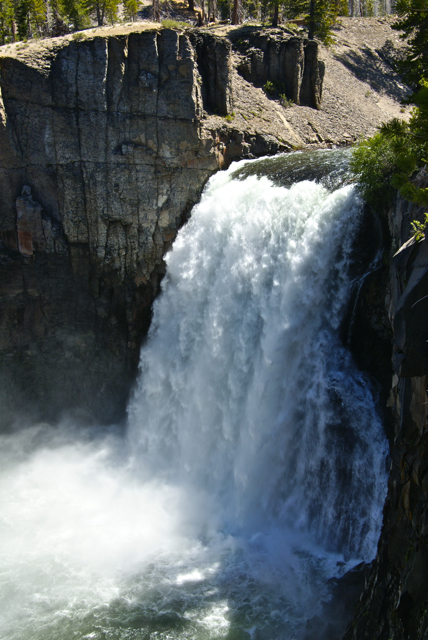
The falls were spectacular and we got there at a good time.  The sun was overhead and because of the large amount of water in the San Joaquin River, the water was plunging over the 101 foot precipice at a high rate, causing a lot of mist to spray up at the bottom, creating the signature rainbow for which the falls are named.  Actually, if you look closely in one of the pictures, you'll see a double rainbow.
We then took our time, lingering around the viewpoint, as well as taking in the other views that had been built.  The third viewpoint, a staircase down to the river below the falls was the most strenuous and the least traveled.  We ended up seeing the waterfall through the water droplets on our glasses down there, but it was well worth the extra time.  Were there any geocaches down there?  Nope.  We hiked there for the experience.

Afterwards, we hiked down to the lower falls, a smaller waterfall further down the trail and outside the park boundary.  Apparently, there were only two other people who took advantage of that trail while we were there, because we saw them at the brink of the lower falls.  We didn't see anyone else on that portion of the trail the entire time we were on it.  Alone in the wilderness.

The return trip was via the main trail that runs along the eastern edge of the park from the falls back to the postpile and beyond to the campground at the northern end of the park.  While on that trail, I kept watching the mountains to the west of me.  Trees would obscure them for awhile and then allow me different glimpses of them further down the trail.  I kept watching this one ridge as it slowly blocked the view.  Eventually I had to stop and take a couple of pictures, otherwise I figured I might lose the view entirely.

Every time I stopped, it seemed like there was another group of hikers heading out to the falls.  The trail is very level, and thus, a very easy trail for all age groups, even if it is 2.5 miles long one way.  I would think that most people could do this trail, even if they weren't in the best of shape.  It would be a good workout for those not in tip top shape and a stroll in the park for those that were.  I probably fit into the former as opposed to the latter.

The common question I ended up getting by most of the groups was "How much farther are the falls?"  Since I had an earthcache at the falls in my GPSr, I was able to give them "crow fly" mileage at least, but since the trail went relatively straight to the falls at that point, the GPSr mileage wasn't that far off.  The interactions with other hikers were pleasant and didn't detract from the overall experience I had on the trail.
It was a great hike.  And yes, there was an earthcache at the falls location.  Did we hike out there to get the earthcache?  Yes we did.  But I think the more important question is, would we have hiked out there had there not been an earthcache out there?  Yes we would.  As President Kennedy stated in a speech in 1961, "And they may well ask why climb the highest mountain? Why, 35 years ago, fly the Atlantic? Why does Rice play Texas?"  The answer is self evident.  In reality, I don't feel geocaching is hiking with a purpose.  I think, rather, it's another reason to get out and hike.

Pictures were taken at or near the following geocache:
Rainbow Falls - Devil’s Postpile NM - by TerryDad2

Profile for Webfoot

Monday, July 12, 2010

Earthcaches Galore

Our trip along the eastern side of the Sierra Nevada culminated in our camping at Devils Postpile National Monument.  This monument, established in 1911, preserves an interesting basaltic columnar formation and an impressive 101 foot waterfall, aptly named Rainbow Falls.

Since the monument is part of the National Park Service, no container type caches can be placed in it, but virtuals (if they were already created) and earthcaches can be.  Earthcaches are a geological discovery.  You learn from the cache page about a particular aspect of geology, answer some questions, based upon your observations at the cache site and thus, get credit for a cache find.  It's the new type of virtual cache that Geocaching allows on its site.

In the park, we found four earthcaches, two on the first day and then two more the next day.  We split them up only for convenience's sake. We could have done three on the first day, but the fourth required a substantial hike, so it was basically unavailable the first day of our camping trip.

One of the earthcaches we did on the first day was the Soda Springs earthcache.  I'd been here in 1977 as part of a biology summer school class I'd taken at my local community college.  Devils Postpile was one of the places we'd stopped to visit and I can remember our instructor, Dr. Bates, talking to us about the Soda Springs in the area.  In August, the San Joaquin River, which runs through this glaciated valley is at a low point, with most of the winter snow melted at this point, so there isn't as much water movement where the springs are and so we could see lots of iron oxide precipitate deposited along the shoreline where the springs were.

We had a very heavy winter in the Sierra this year and even in late June, the runoff was tremendous.  The San Joaquin was very close to flooding in areas.  The meadows were very wet and boggy due to excess water - mosquitoes were rampant.   Because the river was so high and swift moving, the iron oxide precipitate was non-existent here.  It was fun to explain to the Tadpole the differences between the two time periods and why things were the way they were.

 Other things we investigated while in the park were the direction the glacier moved through the park while it was polishing the top of and plucking the face of the postpile.  The postpile is a series of basaltic columns that cooled a relatively even time frame.  When the last ice age glacier scoured the area, the postpile was exposed for all to see.  Over time, columns have eroded and fallen to the base, creating the postpile.  The columns are generally smooth on the top where the glacier ground against them.

They are also large in size.  At first glance, you can't really appreciate the size of the columns, but you have ample opportunities to get very close to some of the fallen columns and it's then you can truly appreciate how big they are.  Earthcaches aren't for everyone, but as the Tadpole likes to say, "you get to learn something with these, so I like them."  They take more time to do and so, they're not conducive to "numbers" runs, but then again, it's not really about the numbers, but the experience.  You truly get to experience the surroundings with earthcaches.

Pictures were taken at or near the following earthcaches:
Soda Springs at Devils Postpile - by TerryDad2
Devils Postpile National Monument - by truckgirl2

Profile for Webfoot

Tuesday, August 25, 2009

Crater Lake

It seems odd that I'm still writing about our camping trip almost a month later, but we ended up doing a variety of things on this trip which kept us busy. Once we'd finished our camping trip at Redwoods National Park, we headed north to Idaho to meet up with my dad at my parent's place at Couer d'Alene. They've owned this cabin for over 20 years and it's a nice spot to relax, while watching the boats go by. We haven't been able to go up there much, mainly because it's a three day drive of at least 8 hours a day. That's a long time for a kid to be strapped into a car seat with not a whole lot to do except look out the window. So both of the boys got to experience Idaho for the first time and they loved it.


Before we got to Idaho, there was this little thing about the drive. The Tadpole and I left Crescent City and headed north toward Bend, Oregon. There's a friend of mine in Bend who
I met on the Internet about 10 years ago and we've met one other time down at Disneyland. She'd offered her place for us to spend the night on our trip north and it worked out well, since Bend is about the halfway point between Crescent City and Couer d'Alene.
On the way, we drove through Crater Lake National Park.

For those of you who are unaware, Crater Lake is a
dormant volcano.
Not too many volcanoes are
considered extinct anymore. I recall Mt St. Helens
being called extinct at one time in the 1960s. Most are now called dormant for obvious reasons. Crater Lake was formed when the former Mt. Mazama blew so much material into the atmosphere, that the mountain literally collapsed upon itself. Over time, the caldera filled with rain and snow melt forming the
deepest lake in North America and one of the jewels of our national park system.

There were several virtual and earthcaches in the park and we attempted all but two. One of the ones we didn't get was a virtual cache that was extremely close to another earthcache. When I was looking at the geocaching map,
I missed that one, so it never showed up in PQ that I ran for the route we traveled.
The other one we missed was an earthcache on the north side of the park. We missed that one due to some fire activity of a controlled burn along the northern edge of the park. They were using the parking lot where the earthcache was located as a staging area for the firefighters. The parking lot was closed off, so we couldn't get it. The Tadpole has expressed interest in coming back and actually
camping in the park, so that means we'll probably be able to get these two on a return visit.

The last time I was at Crater Lake was on my honeymoon twenty two years ago. It was July and we were snow bound. The night before we arrived, a
storm had rolled through the western
US and dumped over a foot of snow on the rim at Crater Lake. We were
confined to a very small area of the park and the rim drive was closed, so many of the viewpoints were out of our reach on that trip. This time, there was a lot less snow, so the Tadpole and I were able to explore quite a bit of the park.

We traveled down to the Pinnacles area, a spot where I'd never been before.
These interesting features were created as fumaroles, which hardened over time and then had the surrounding material eroded away. We also got to see
the
Phantom Ship and got some great views of Wizard Island, a volcano growing inside a volcano. The blue of the water is pretty much indescribable. The water is very clear and from what I understand, you can see fairly deeply into the waters. The reflection of the sky creates an incredible blue that has to be seen to really be appreciated. I'll let the pictures do most of the talking.

Pictures were taken at or near the following geocaches:
Ode to a Lake - by LooneyTunes
Mt. Mazama - by Lost Scouts
The Pinnacles - by Chod
Pumice Castle and the Old Man of the Lake - by 47Dad47, KollyWobbels, Sally, and Russ

Profile for Webfoot

Tuesday, August 18, 2009

Underground wonders

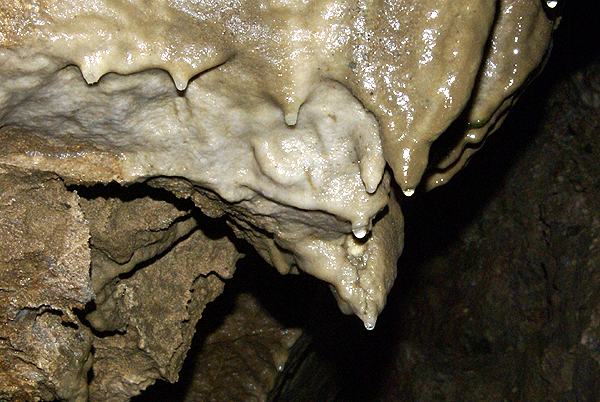
While camping in Redwoods National Park, we made a day trip into Oregon to tour Oregon Caves National Monument. The caves here are some of the five percent of the caves around the world that are marble caves. Most are created from limestone. Those that are near major plate boundaries tend to be marble, because of added heat and pressure from below which metamorphoses the limestone into marble. Sequoia National Park has a marble cave tour that we've gone on several times and have enjoyed. This one would be no exception.

We were fortunate to get as our tour guide one of the park rangers whose specialty is geology, so we got a very informative tour. We got to experience a cave blackout, which is pretty standard on most cave tours, but it's always kind of creepy to experience that total darkness, where no light penetrates. I can't imagine getting lost in something like that, yet it seems that most of the early discoverers of caves seemed to have done just that: went in with minimal light, then had to grope their way out. I guess they all make good stories to tell on the tour.

When touring a cave, the number one rule is always, DON'T TOUCH THE FORMATIONS! I can't stress that enough. Oils from your hands can get on the formations, which will alter the water flow of the formations, usually causing them to stop growing. I've toured several different caves during my lifetime, including Wind Cave in South Dakota, Carlsbad Caverns in New Mexico, Crystal Cave in California (Sequoia), Lehman Caves in Nevada, and now Oregon Caves. To a greater or lesser extent, all of these caves have had some damage from humans. It's pretty much inevitable.

I can't remember much of Wind Cave, since I was there almost 40 years ago. Carlsbad seemed to have the least, although it does have an elevator shaft built in it, complete with stalactites growing in the roof of the elevator shaft. The worst damage that I can recall was in Lehman Caves. This was primarily because the caves were an entrepreneurial adventure for Absalom Lehman back in the 1920s. He let people literally go into the caves with sledgehammers so they could leave the caves with souvenirs. The damage was pretty evident in those caves.

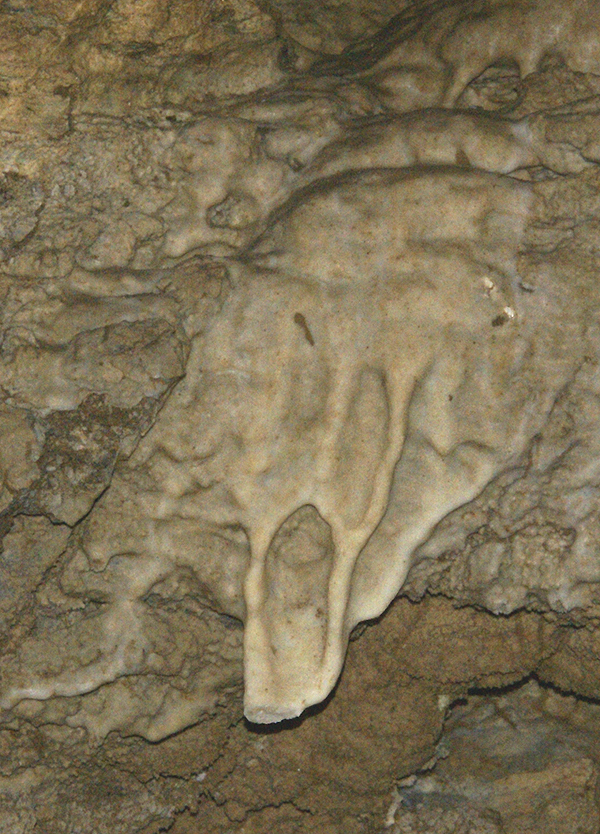
The human damage was much less here in Oregon Caves although it was evident. We came across a rock where past visitors, from the 1809s felt it necessary to write their names on the stone in pencil. We walked right by the rock formation. It seemed obvious to many of us on the tour, that if the graffiti had been written in pencil, it should be fairly easy to erase it. Not as easy as it was thought however, because the cave is still a growing cave the pencil marks have since been covered over by a thin patina of flowstone. In other words, the graffiti has become one with the rock. The only other damage I noticed was a formation that reminded me of a painting by Edvard Munch entitled, "The Scream." At the bottom of the scream, there appears to be a piece that has been broken off.

This particular cave has gotten me to think about creating an earthcache. I found a nice spot where geocachers can observe some different cave formations. In the next week or so, depending upon my schedule, I'll be working to create this earthcache. I already have permission from the chief geologist of the park, so it's now just a matter of writing it all up and submitting it. That's the kicker though is finding the time.

The past week has seen me start back to school. We keep starting earlier and earlier. 14 years ago, my wife was pregnant with our third child, the Tadpole. His due date was September 12th, which was problematic at the time because that was my scheduled first day of school. Fortunately, I worried about this needlessly, because the Tadpole decided to make an entrance into the world 11 days early, so it didn't impinge upon my schedule. Look again though. September 12th was the first day of school in my district in 1995. My first day of classes this year was August 10th. Sigh. My apologies for not writing much this week. It was a busy first week.

Pictures were taken at or near the following future (hopefully) earthcache:
Oregon's Hall of Marble - by Webfoot

Profile for Webfoot

Sunday, August 2, 2009

18 feet

Our second day of our camping trip was pretty much dominated by a couple of very nice hikes, one we'd planned on and one that doubled in length due to my own stupidity. We were camping in Samuel P. Taylor State Park which is adjacent to Point Reyes National Seashore. It was at Point Reyes where we made our first hike along the earthquake trail.

Just east of the visitors center, is a nicely laid out interpretive trail, which tells about earthquake activity in the local area. Point Reyes sits atop the San Andreas fault zone and was formed by the fault. To the east of the park lies Tomales Bay, which is a drowned part of the fault zone as it heads out to sea. The trail we took wound through the fault zone area south of Tomales Bay, with interpretive signs alongside the trail where we could read about earthquakes, most notably, the deadly 1906 San Francisco earthquake, which destroyed most of the city, either by shaking or by fires after the fact.

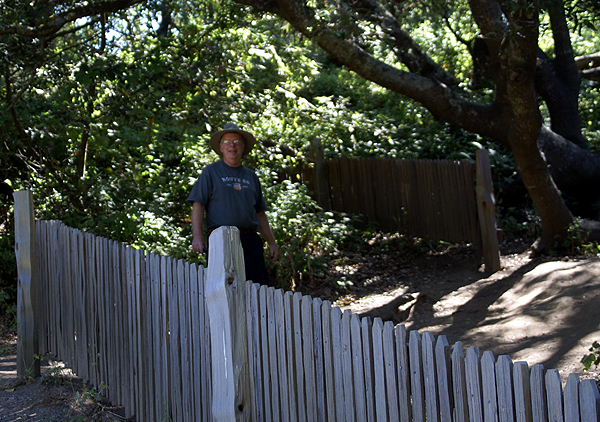
The area we were hiking through was the epicenter for that earthquake. There were fence posts that followed the fault line which was responsible for the shaking over 100 years ago. At one point we focused on a fence that had been offset 18 feet by the earthquake. Having experienced several 7.0 or larger earthquakes in my lifetime, I've never seen that kind of horizontal movement of the earth. I can only imagine how terrifying that might have been. If you look at the picture of me standing behind the fence, you can see the 18 foot gap where the fence had been ripped apart. This was not the original fence, but a replica created on the site of the original.

Besides the geology, which we used to complete an earthcache in the area, we also enjoyed the diversity of animal life. At one point, I heard a rustle in the bushes to our left and spotted a newborn fawn, complete with spots. It was too dark to get an adequate picture of the fawn and I was prevented from getting any closer by trail manners and this deer's own skittishness. After this one started walking away, another arose from the bushes to follow its sibling. As we rounded another corner, we spotted what we think was the mother of these two walking along the fault line. We also saw many fence lizards enjoying the sunny day. Bumblebees were enjoying the summer flora by taking in the pollen and nectar from some poppies that we noticed in the field.

The sunny skies were an illusion for us as we traveled out to the point. There is a lighthouse out on the point which we wanted to visit. Unfortunately, due to budget cuts in the National Park Service, the lighthouse and visitors center wasn't open that day. We figured we still might be able to walk out to the point to get some perspective on what it would have been like. As we drove the 18 mile road, the weather started getting worse and worse. Finally, we were driving in fog in open range country. The seashore is home to 7 historical dairy farms and I had to drive very slowly in the fog in order not to hit any cows that might be in the roadway.

When we got to the parking area for the lighthouse, we noticed wind blowing. Hard. We got out of the car and the wind hit us with gale force intensity, probably gusting to 50mph or so. Fog was traveling horizontally over the point and we couldn't see much more than 20 feet or so in front of us. Even with coats, we would have been defeated by the weather. But it was an adventure we'll not lose the memory of, so that's a good thing.

After being stopped by the weather, we decided that we needed another hike and Tomales Bay State Park provided the spot for that. Our entrance fee was waived because we were camping in nearby Taylor State Park, so we drove down to the beach and parked. We ate a nice picnic lunch, then headed over to find a geocache where I wanted to drop off a travel bug that I'd brought along. We got out to the cache after a half mile hike and encountered several difficulties. One was a bee hive in a dead tree about 50 feet away from where the GPSr was saying ground zero was. This could be a problem, because the tree cover was heavy which could affect the accuracy of the GPSr. The cache could very easily have been near the bee hive. Reading over past logs on the cache page verified that it was not so that was a relief.

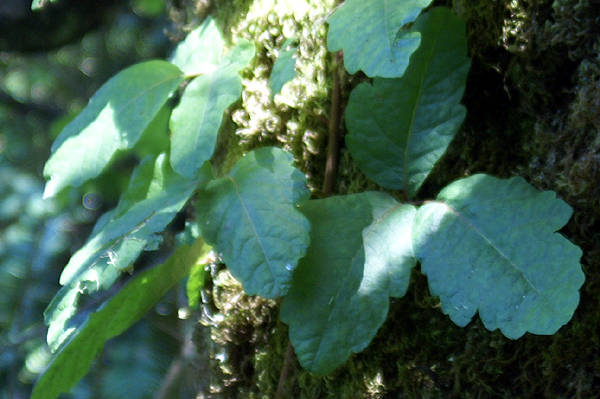
Our second problem was large amounts of poison oak. Along the hike in, we'd spotted it in several locations and it was flourishing along this trail. I spotted some with leaves as large as my hand. There was some around ground zero that we noted when we finally spotted the cache, but nothing that would cause a problem. However our third problem was the most idiotic. There was no pen in the cache. Why such a large cache didn't have a pen is beyond me, but I should have come prepared anyway. With no pen, we couldn't sign the log so we had two choices: sign in blood or hike out to the car and get a pen. We opted for the latter option thus turning a one mile round trip hike into a two mile round tripper. But then again, it's an adventure.

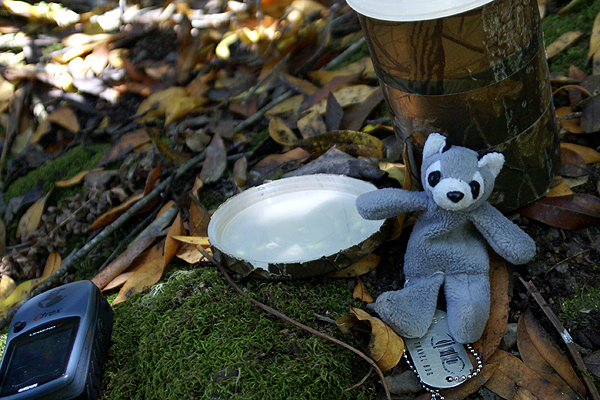
After dropping off Roger Racoon (sic) the travel bug, we felt we'd had a pretty successful day caching, even though we ended up finding but three caches. It wasn't about the numbers, but the experiences we had. We would have other days where we'd find more. Today was a day to stretch our muscles and get some exercise, while finding a couple of caches. We accomplished that.

Pictures were taken at or near the following geocaches:
Point Reyes EarthQuake Trail - by forman
Johnstone - by Mike P. (MPERC) adopted by forman

Profile for Webfoot

Monday, May 4, 2009

Nice Gneiss

When I go out geocaching, I'm always looking around for interesting subjects so I can improve my photography skills. I end up taking a lot of pictures of flowers, mainly because they tend not to run away from me when I approach. Animals usually end up next on my list, although they do tend to not like it when I get too close, so I have to resort to my telephoto lens and sometimes hope for the best. Every now and then, I end up taking pictures of rocks, either because it's required of me due to an Earthcache that I'm logging, or because something has struck my fancy about the rock.

Usually, what I find interesting others might just pass by. I'm frequently at awe over the power of nature, especially the interaction between plants and the rocks and how they interact with each other. I love looking at tree roots, especially if they on the upper side of a trail, because you can see how they sought out the cracks in the rock where there might be some soil. You can also see how the tree roots hold the hillside in place and wonder how the hillside might be different looking were those trees not there.

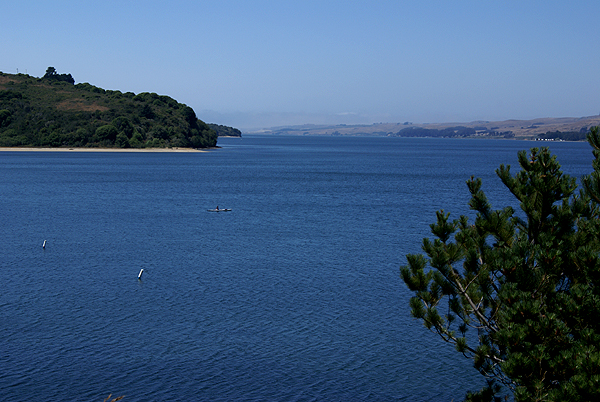
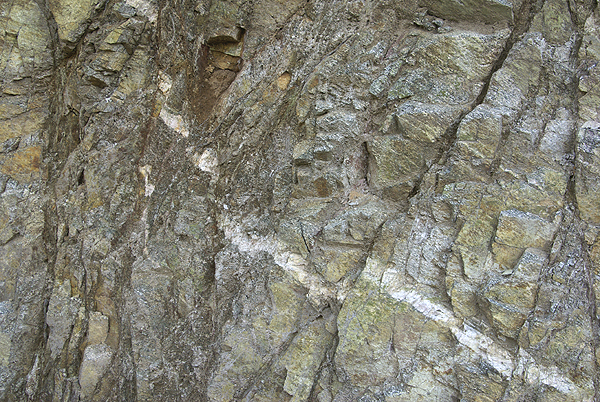
About a month ago I was on a hike with my friend Chaosmanor and we noticed some faulting along a rock face. There were some bands of striated rock material that had been misplaced in numerous places. Chaosmanor was intrigued enough that he took several pictures, as did I, and has decided to create an earthcache along that section of the trail. We had an interesting discussion trying to decide whether the rock pieces had dropped down between the faults or had been uplifted. As an amateur geologist, I find rock faces that tell stories like this very interesting.

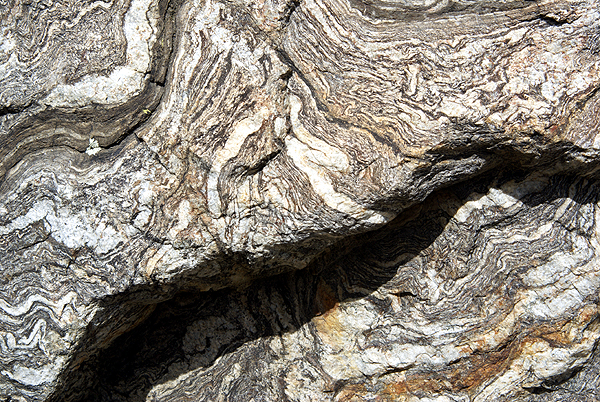
I also enjoy trying to identify different types of rock. Usually this happens when Chaosmanor is along with me, mainly because he has similar interests to my own in this area. When I try to talk about rock types with other friends, a lot of times you can see their eyes glaze over. "Geez, he's talking about rocks again." Chaosmanor and I, on the other hand, enjoy a good talk about geology. We even like to throw a pun at each other from time to time when one of us has correctly, or even incorrectly identified a certain type of rock. "Gee, that is some nice gneiss you're holding there."

I can probably blame my father for this love of rocks. He was the one who took us to Yosemite, frequently over the course of my developing youth. I can blame him because I like to look at large rocks as opposed to tiny grains of sand along a beach. And if you don't believe me, you can always say that I'm full of schist.

Pictures were taken at or near the following geocaches:
Subterranean Homesick Blues - by Terra Girl
Micro N Post - by not tom
Tree at 4737 - by not tom

Profile for Webfoot

Friday, November 28, 2008

St. Francis Dam

Last week, Chaosmanor and I went up into San Francisquito Canyon to do some geocaching. One of the caches we looked for was the earthcache, St. Francis Dam Failure, Saugus California. Obviously, the earthcache has you examine some of the things that led to the failure of the St. Francis Dam, back in March 1928 over 80 years ago.

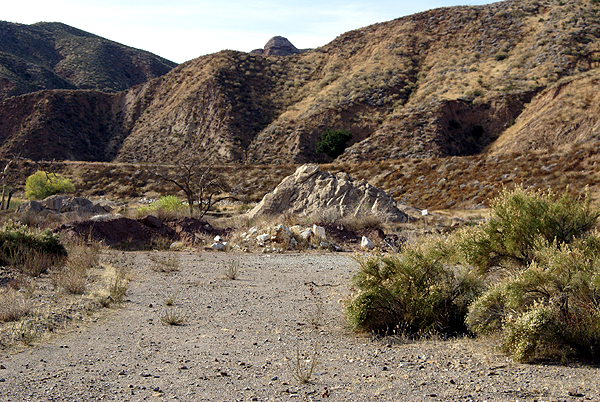
As noted previously in my last post, the road used to lead right past the dam site, but the dam, or what's left of the dam is now shielded from the new road course. I don't believe this was done intentionally, but we both noticed that you cannot see the dam either coming or going along the new course of the rive. Well, I take that back. You can see the dam as you make your way south out of the canyon, but only if you really know what you're looking for, which probably leaves most of us out.

The dam was constructed between 1925 and 1926 and then was slowly filled over the course of the next couple of years. It was designed by William Mulholland, the chief architect of the Los Angeles aqueduct that brings needed water to the city from Owens Valley along the east side of the Sierra Nevada. This reservoir was designed as one of the storage sites for that water.

As the dam slowly filled, cracks and leaks were noticed in the face of the dam, but they were pronounced normal for the dam by Mulholland. As the lake increased behind the dam and more pressure was exerted on the dam, more cracks and leaks developed, each one being dismissed by Mulholland as normal for a dam of this size. The lake was at full capacity for five days before the dam collapsed, first on the east side, then on the west side leaving a large portion of the dam upright and standing in the middle of the stream with water flowing around it.

The dam pieces were pushed downstream up to a quarter mile away as the water rushed down San Francisquito Canyon. No one know for sure how many people dies in the flooding that followed. I've seen counts as low as 450 and as high as 600. Those are "official" counts and are also acknowledged as being on the low side because there was no accounting for the migrant farm workers that were living in the area. I also read a report that stated they were still finding bodies as late as the 1970s.

This disaster, obviously ended William Mulholland's career. The geology of the area known in the 1920s was not enough to prevent the dam from collapsing. Newer developments would have been able to see the flaws that led to the collapse of the dam and the dam would not have been built in that particular position in the canyon. As we stood on the top of what's left of the dam, we figured out why Mulholland chose that particular site. It was a natural site for a dam, a fairly narrow canyon that opened up onto a broad expansive valley upstream. The place where the dam was built was narrow and would have trapped a large volume of water behind it. It was just built, geologically, in the wrong spot.

It's interesting that Mulholland admitted he made a mistake and claimed full responsibility, yet there doesn't seem to be any major lawsuits brought forth following the disaster. Perhaps it was because the inquest placed the responsibility at his agency's door, but also stated that Mulholland had no way of knowing the geologic formations where the dam was placed would cause the failure of the dam. I'm pretty sure we would not see the same kind of reaction from the general public if a similar dam were to collapse now. Lessons were learned and have been applied to other dams built afterward, similar to lessons learned when the Titanic sank.

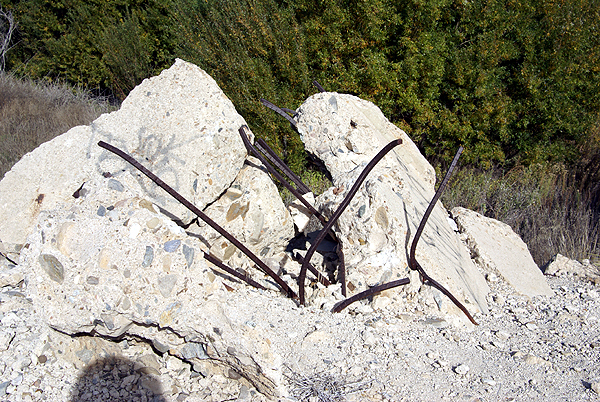
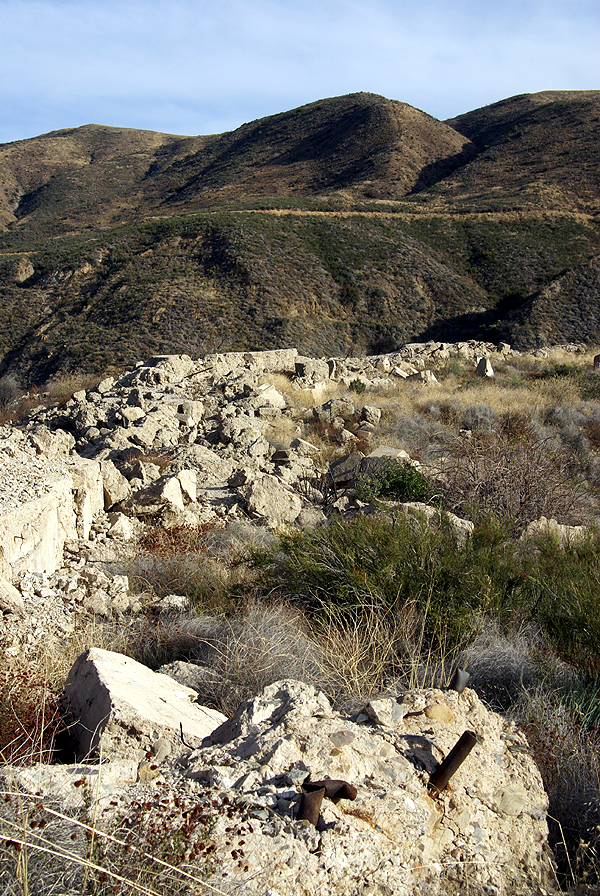
I'll not get into the specifics of the earthcache itself. If you wish to do this earthcache, it's fairly straightforward and easy to do. You get a lot of insight into dam building and what caused the failure, plus you can see the raw power of 12 billion gallons of water. The pile of debris in the third picture is pieces of the dam at least a quarter mile away from the actual site, moved there by the water as the dam collapsed.

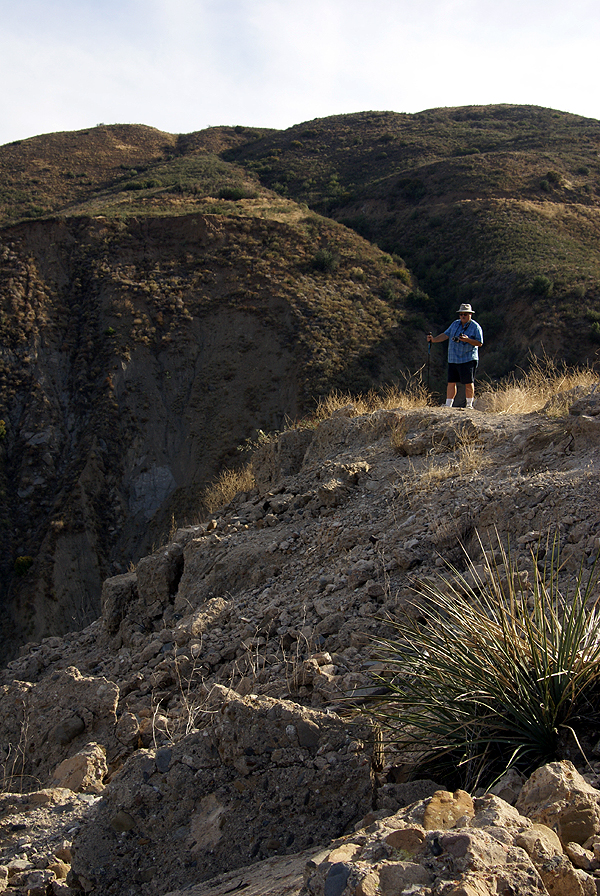
Another geocache took us up to the top of the western part of the dam that was still there. The middle part of the dam, that was left standing after the flood, was later demolished after someone was killed attempting to climb it. Standing up on top of the dam was where we got to see why the dam was placed there. The broad valley behind the dam was perfect. Had the dam not fallen, I could see where this area would be a perfect recreational area for boaters. This would have been a huge lake.

At the same time, had someone been standing up on the western side of the dam when the other part collapsed, it probably would have been mind numbing to see it happen. It took close to two years to fill the lake completely and it drained in less than two hours. I've seen pictures of people who were standing on the top of Mt. Adams when nearby Mt. St. Helens exploded back in May 1980. One woman just fell to her knees as she watched that drama unfold. I can only imagine it might have been similar here, had there been a witness who survived.
South of the actual site there is a California Historical Marker noting the disaster, but that seems to be the only official noting of the tragedy. The site is in the process of generalized decay. There is still quite a bit to see considering the site is 80 years old. The main portion of the west wall is still intact and accessible from a trail head that starts south of the dam, or from the beginning of a road cut that was made when the newer portion of the road was made a couple of years ago. There are huge chunks of the dam sitting in the middle of the canyon, some with inch thick rebar and rusting pipes jutting out of the sides of these pieces. Smaller pieces of the dam, I'm sure, are disappearing as souvenir hunters comb the area, but the main pieces won't be going anywhere anytime soon. If you get to this area, I highly recommend a side trip up here, just for the historical interest of the site.

It's unfortunate that a disaster such as this has to happen to spur government officials to act in the best interests of the people. That seems to be our way of life. Fortunately, these types of incidents don't happen nearly as frequently as they did earlier in the last couple of centuries. Yes, it was an ugly incident, but some good did come of it, and that is a good thing.

Pictures were taken at or near the following geocaches:
St. Francis Dam Failure, Saugus California - by TerryDad2
In the Shadow of St. Francis Dam - by Yosemite John and Debbie
St. Francis Cache - by Tom and Tommy

Profile for Webfoot

Wednesday, November 26, 2008

Mother Nature Reclaiming What is Hers

Several weeks ago, we had terrible wildfires rush through several areas of Southern California. Today, with the heavy rains we've had, I would suspect that all of these fires are completely contained. I drove through the Santa Ana Canyon, where the Freeway Complex fire was, via Hwy 91 this morning and got a first hand look at the devastation. For homeowners it must have been horrifying. I could see burned spots that stopped right at back yards. Now it's Mother Nature's turn to reclaim that land. Some won't be reclaimed because of human habitation, but areas will slowly turn green again. The Earth will heal itself.

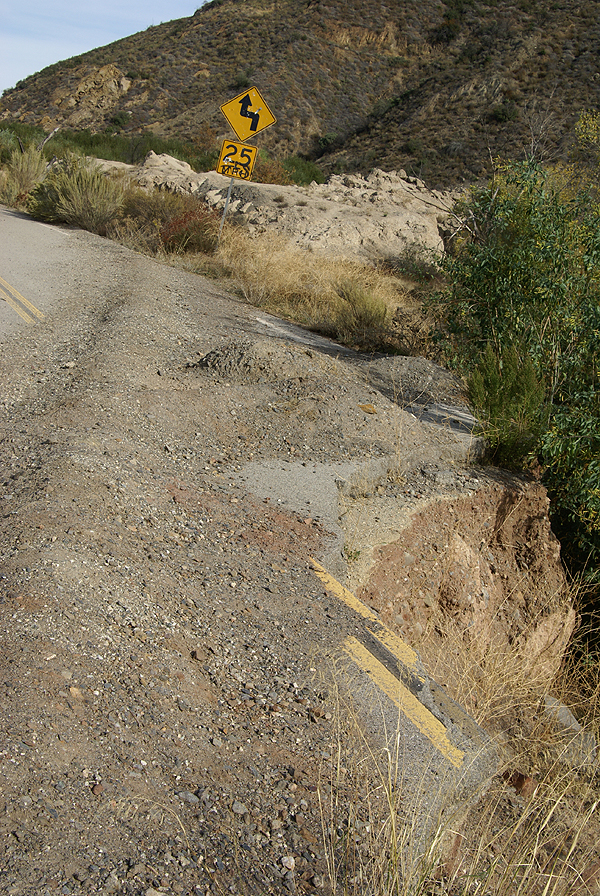
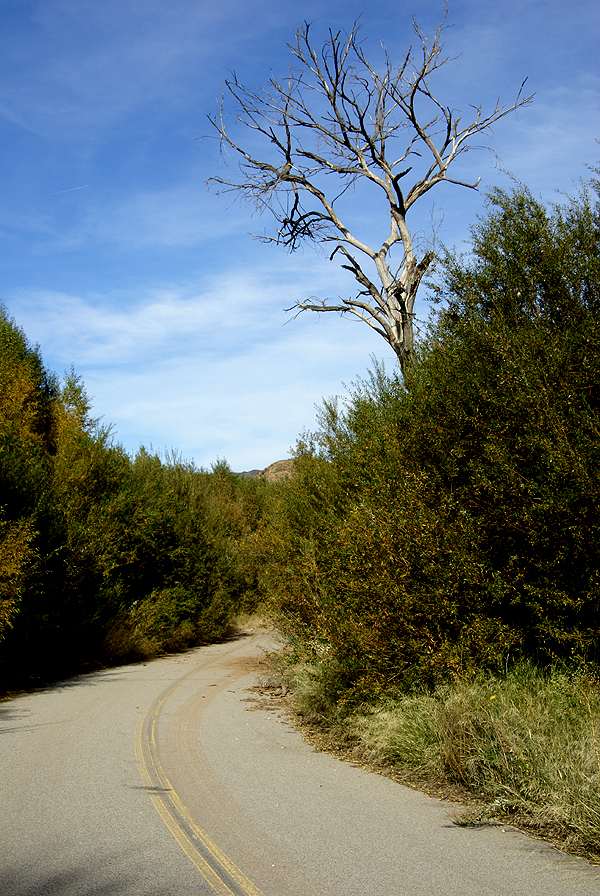
Last Saturday, I found some geocaches along a stretch of road that had been abandoned, due to flooding. The road had recently been realigned around a narrow spot in this canyon, bypassing this particular part of the road. Nature has a way of taking back what is rightfully hers, and it was rather evident at this spot. Bushes and shrubs were encroaching on the road.

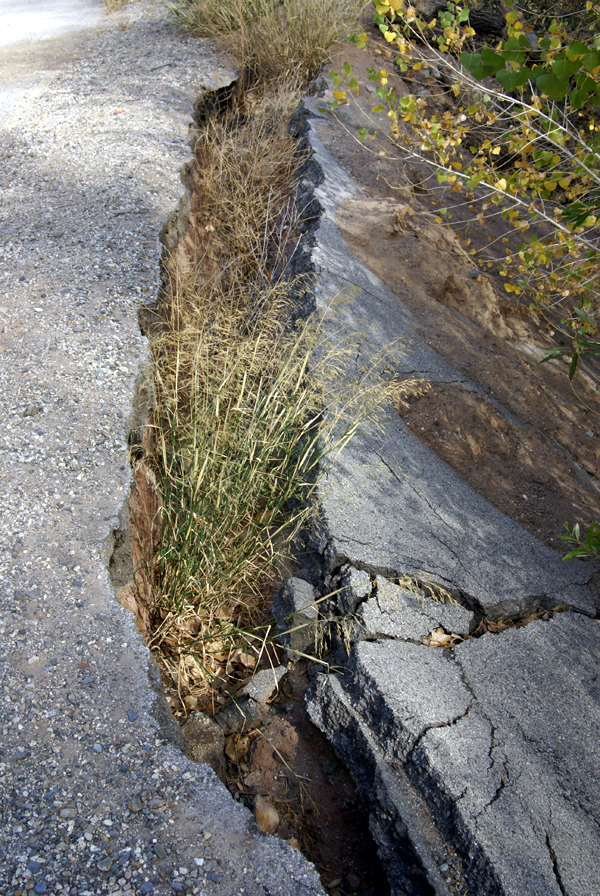
Several years ago, we'd had an El Niño year, which means lots of rain. There was plenty of evidence of that, because there were several places where the road was almost washed out completely. Eventually, this area will be reclaimed by nature and the barriers that are there now to prevent cars from driving on an unsafe road will be removed. But for now, it's a work in progress.

As we hiked through this canyon, I was struck by how powerful nature (water, wind, fire) really is. In an instant, a landscape is changed by fire or flood or possibly a landslide. It may take years to hide these "blemishes" as we might call them, but are they really blemishes at all? Probably not. While doing an earthcache in the same area, we were asked to look and find other areas where we could see evidence of landslides along the hillside. I stopped counting after noticing half a dozen. Had we not done the earthcache, I probably wouldn't have thought twice about what I was looking at, yet here was evidence of massive change, that was hardly noticed by most people, because, once again, the Earth had healed itself.

It gives me hope for the future. No matter what we end up doing with ourselves, the Earth will probably survive, rebuild and start anew. A new species will now possibly grab the top spot among the sentient beings on the Earth. But, the Earth, will heal. In fact, it's trying to heal right now. Sometimes, I think we just need to step aside and let the master work.

Pictures were taken at or near the following geocaches:
Reclaimed by Water - by Yosemite John and Debbie
St. Francis Cache - by Tom and Tommy
In the Shadow of St. Francis Dam - by Yosemite John and Debbie

Profile for Webfoot

Thursday, November 20, 2008

Anticipation...

Christmas is just around the corner. I turned on my favorite oldies station this afternoon and they were playing Christmas music and they announced that they planned on playing a lot of it over the next five weeks, thus bringing up the anticipation level even more than it already is I guess. The anticipation level here is a little bit different and it's actually delayed a bit farther into the future.

Part of the fun of anything, whether it be Christmas, your birthday, or a trip of some kind is the anticipation before hand. There's planning to do and things to buy. With a trip, there's the anticipation of seeing new sights, doing new and different things, or possibly visiting places you've been to before and thinking about all the new memories that will happen.

When I went to visit my daughter earlier this month, we broached the subject of me coming up again to visit in February. I have a four day weekend, so I thought it would be a great time to come up and visit, maybe go somewhere and of course, do some caching. We talked about possible day trips we could do that weekend, and we came up with a day trip into San Francisco, with a possible stop at Alcatraz Island, going down Lombard St., touring Pier 39, and maybe visiting Fort Point under the Golden Gate Bridge.

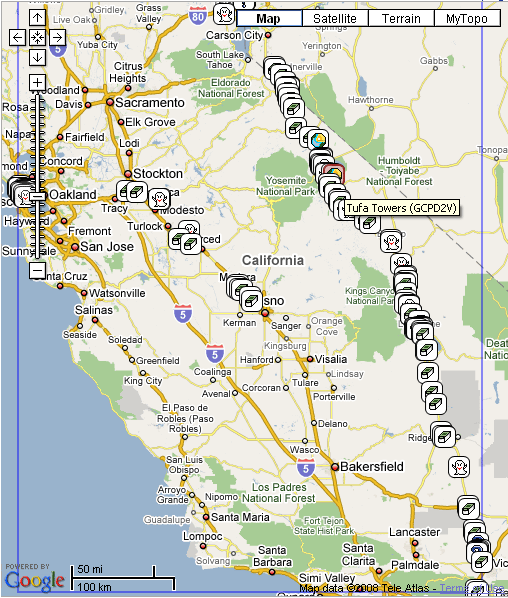
Once I got home, I started to think about this. Usually I go up through the Big Valley, then come home the same way, getting caches both ways. I thought this trip might be fun if I varied my route, to include heading over to Reno, then coming down Hwy 395 through the Owens Valley. This one is pretty much weather dependent and could get snowed out, but I decided that I might as well start the planning process.

There are several caches that I'd like to find on this trip. I could probably make a list that would go on for several pages, but I'll try to limit it to the ones that have some kind of meaning. I guess you could call this adding to my bucket list.

Mazanar Waterworks Virtual Cache is obviously in Manzanar National Historic Site. The place preserves an era of our history that I'm sure many would like us to forget wen though we shouldn't. I've found another cache already in the park, but I'd like to come back here and check this one out, plus another just outside of the park boundary.

The Monoville "Hunters" Cache was hidden by Snoogans, a friend that I know only through the Geocaching forums. He lives in Texas, but regularly visits this eastern part of the Sierra. This allows him to hide caches that are outside of his normal range, so as to not be a "vacation" type of cache. I think it would be fun to find a cache of someone that I've known for several years. He hasn't found any of my caches yet, but he's found several of my geocoins and travel bugs that have made it to his neck of the woods.

Since I'll be driving by Mono Lake, it would be criminal not to stop and view the Tufa Towers and get the earthcache of the same name. These towers are mineral deposits left over when the lake was at a higher level. The city of Los Angeles bought up the water rights in this area and has siphoned a great part of the water off for its own thirst, but laws are in place that will hopefully prevent the total desecration of this lake. This should be an interesting cache to find. For you cinematic buffs out there, this episode of Los Angeles history is chronicled well in the movie, "Chinatown" staring Jack Nicholson and Faye Dunaway.

Since 395 goes into Nevada, I'd have to get at least a couple of caches in that state as well. 12 Resting Trees, is one of many I could choose from, since it's large and apparently in a good spot to find.

If we do get over to Alcatraz, then we'll have to Escape from Alcataz just to say we have.

At the moment, there are 129 caches on that map that can be found. They won't all be found. I know that, but it's still fun to think about it. As I've gone over the maps, I've looked at many of the cache pages and thought that a particular cache looked interesting and I'd like to find it. Many on this list are like that. We'll see. Snow could close the I-80 and I'll have to come back down by way of Hwy 99. That's OK too. It's a journey, no matter which way I go.

Pictures were taken at or near the following geocache:
Manzanar Virtual Cache - by GoodDogSD

Profile for Webfoot

Wednesday, April 9, 2008

Virtuals Reborn?

When I first started caching back in March 2001, caching was still new. President Clinton’s executive order de-scrambling the satellite signals so that the average person walking around on the planet could utilize the GPS technology was less than a year old. Caches were few and far between and there weren’t as many regulations regarding caches, probably because not everything had been thought out yet.

The sport is still evolving today. I remember looking at the website, even before I’d purchased my first GPS unit and marveling that there was actually a physical cache hidden in Yosemite Valley. I thought at the time, “Wow, that’s kind of cool that they would allow someone to place a cache right there near the chapel in the valley.” In actuality, they really hadn’t given permission and the cache, I believe, was removed by the National Park Service, as “abandoned property.” I know that there are a couple of physical caches still in existence in National Park areas, most notably, the one down at the bottom of Grand Canyon, but that is maintained by the Park Service. As of this writing, permission hasn’t been granted to hide any in national parks, nor probably won’t be in the foreseeable future.

And that’s not necessarily a bad thing, more likely, just the way things have worked out over the past 8 years that the sport of geocaching has been around. I think physical caches in national parks would become problematic no matter how well they were maintained by the owners. I found a Pop-Tart in one of my geocaches once. Imagine what would happen if an uniformed cacher placed a small granola bar in a cache that had been placed in a national park where bears frequented, or any animals for that matter. Animals would be attracted to that cache like honey to a hive. In all likelihood, the cache would probably be destroyed and if the animals became a problem, they could as well.

Within the past year or two, we’ve seen the development of a new kind of cache called an Earthcache. Earthcaches are places that people can visit usually to learn more about the geology of a particular area. In reality, what Earthcaches do is replace the Virtual Cache (which has been eliminated by Geocaching.com) in spots where physical caches can’t be placed, like national parks. Cachers learn about the geology of an area, do something for the cache “hider” to prove that they were there, and they get credit for finding an earthcache. Similar to virtuals, usually the requirement is to answer questions about the site, or posting a picture of you and your GPSr at the site.

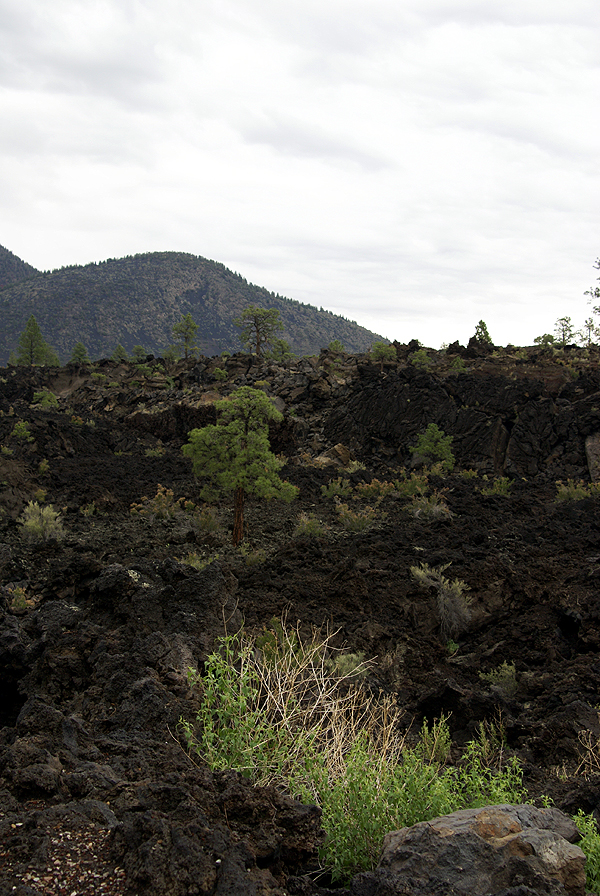
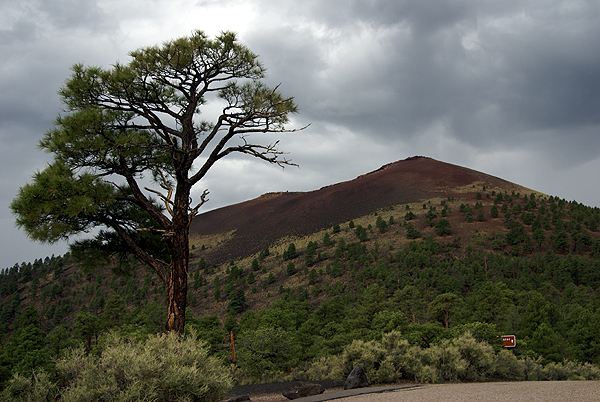
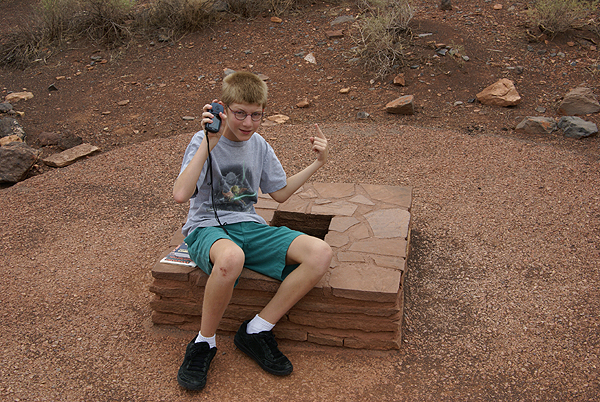
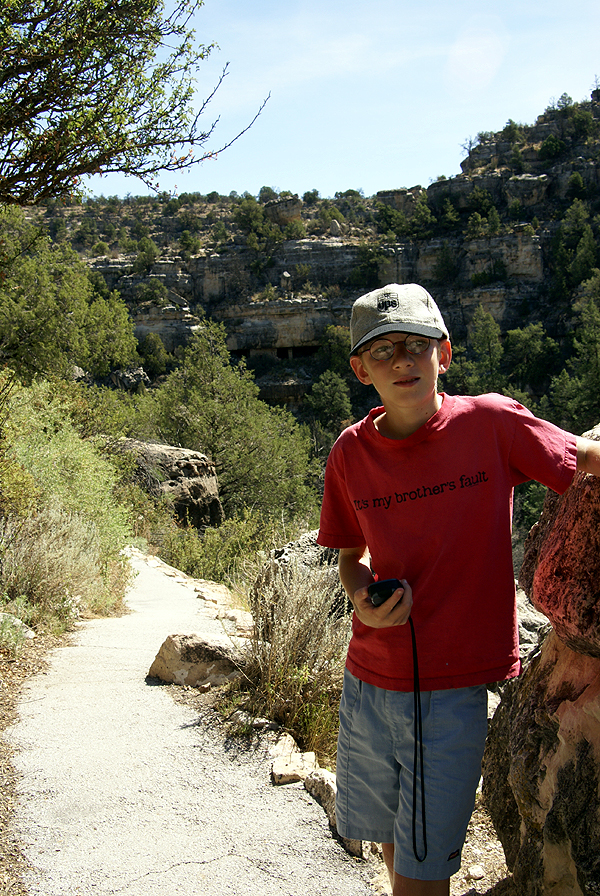
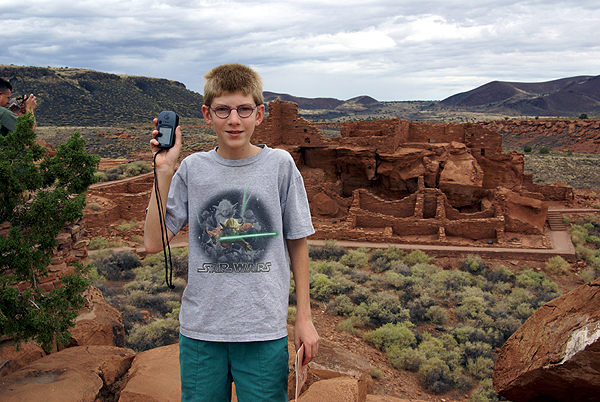
My son enjoys going out and finding earthcaches. He stated one time that he likes the educational nature of an earthcache. “You get to learn something about the earth when we visit them Dad.” Needless to say, when we went on our tour of the pueblo areas near Flagstaff, AZ and the Grand Canyon area last summer, we found several earthcaches. One was a blow hole near some pueblos in Wupatki National Monument. The underground chambers reacted to the outside change in air pressure and actually blew out or sucked in air through a small hole in the ground. We actually missed a pretty spectacular display of this blow hole by about four hours or so. We’d visited the blowhole in the morning while we toured the area. There was a gentle breeze blowing out of the blowhole when we were there. When we got back to our campsite later than evening, we learned from other campers who had been there later in the day that a girl had been floating her Crocs on the column of air that was being forced out of the blowhole. That’s pretty impressive, even if you don’t particularly like Crocs.

The larger national parks within the United States have several Virtual caches placed in them that have been grandfathered into the geocaching system. The smaller or lesser known parks, never made the cut probably because they weren’t really visited by cachers before GC.com placed a moratorium on Virtual caches. What has happened is Earthcaches have now filled the missing niche in some of these areas. When I first investigated the area northeast of Flagstaff as a camping spot for last summer, I looked and saw a multitude of earthcaches. I figured we’d get a couple of them and move on. I was surprised, although I shouldn’t have been, knowing my son, that we found all of them in that area once everything was said and done. He loved the concept of an earthcache and wants to find more of them in the future. Who knows? Perhaps on our next camping trip, we’ll find a geological area and create our own earthcache.

Pictures are from the following caches:
Bonito Lava Flow - by TerryDad2
Cinder Hills Overlook - by TerryDad2
Wupatki Pueblo Blowhole - by TerryDad2
Walnut Canyon Geologic Sampling - by TerryDad2
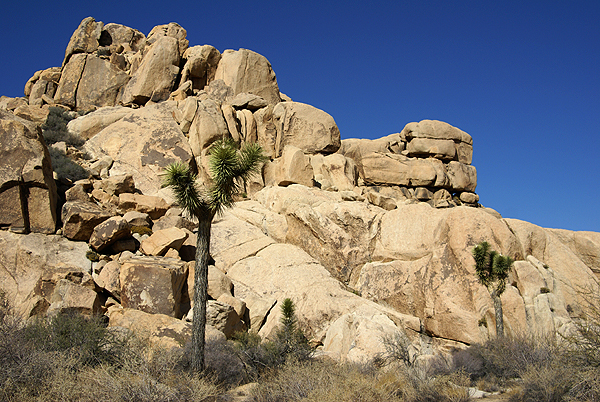
Joints of the Wonderland of Rocks - Joshua Tree NP - by TerryDad2

Profile for Webfoot

Sunday, January 20, 2008

Virtually yours

I have found 67 virtual caches since I started caching back in 2001. Not a lot, but it represents 3.8% of all of my cache finds. Count the couple of Mystery caches which were really virtuals, the one webcam cache that I’ve logged, the earth caches that I’ve found and those pesky locationless caches and some folks would say that about 5% of my cache finds aren’t “real.” And those people would be right, when you consider that you’re supposed to find a cache container when you go out geocaching.

Does that make virtuals non-caches?
It seems that Geocaching.com appears to believe it since they don’t allow virtuals to be listed any more. They have allowed ones that were already created to be grandfathered in to the system. The same holds true for webcam caches. I know, because I own the Blue Jay Webcam cache. I don’t own any virtual caches, mainly because I couldn’t find, what I thought was a suitable location for a virtual. And I think there is where the problem lies with virtual caches. I’m not trying to pat myself on the back for this one, but I think if people had been a little bit more discriminating when they set out to create virtual caches, we might still be allowed to post virtual caches today.

The principles of a virtual are pretty simple. Instead of a cache to find, you have to find information. You then email the owner of the virtual with that information before you can log the cache. Sometimes, you have to post a current picture of you at the site which will satisfy the logging requirement. Sometimes you have to do both. Most are educational in some way and many are fun and whimsical.

As I went through the 67 different virtuals that I have logged, I can remember most of them right away. I can remember some of them being very interesting, helping me learn about the history of a given area, or perhaps taking me to a place where a real cache couldn’t be placed because it was either in a National Park, or on private property. Yet those caches still allowed me to play with my GPSr, got me to exercise my brain, and usually helped me learn something. What I also found interesting was the amount of pictures in my gallery that were devoted to virtual caches. Usually virtuals have that “Wow” factor built in that makes you want to grab your camera and take some pictures of that unique and/or beautiful area.

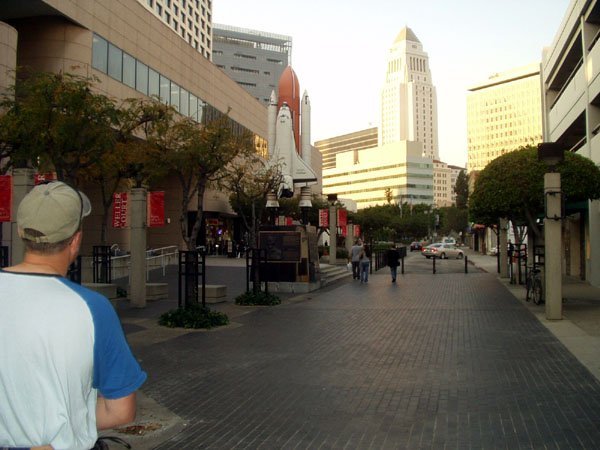
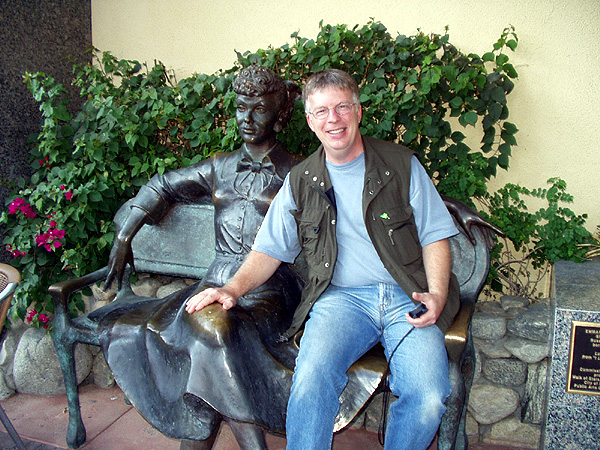
Since I've started caching, I’ve learned about the first Mayor’s house of Atwater, California, walked around Downtown Disney to find 20 – yes you read that right – 20 different waypoints, and seen the gravesite of one of Wyatt Earp’s relatives. I’ve been moved by a memorial to the Space Shuttle Challenger and almost brought to tears by a memorial to the California victims of 9/11. I’ve also hiked a trail in Joshua Tree National Park that I’ve avoided many times in the past because it didn’t look that interesting compared to some of the other spots in the park, and yet when I took that trail last November, my son and I found four virtuals along the trail and learned some interesting history about one of Joshua Tree’s local characters. Each of these I found to be good examples of what virtuals should be.

On the other hand, I can also remember several virtual geocaches where, after I’d gone through the motions of doing the required elements to log the cache, I thought, “Eh, that was ok, but couldn’t he have just placed a micro over here, or perhaps she could have set up an offset using some of the information on the plaque?”

Some of these virtuals I’ve found, were just plain lacking. The information could have been easily transmitted on the cache page and a real cache could have been hidden at the site. One virtual I found was about an oak tree that wasn’t there anymore. All the history of the tree was on the cache page, so why didn’t the hider just hide a cache there and leave the history on the cache page? Another was a shrine to frogs. Now I love frogs probably just as much as the next cacher, maybe even more, but couldn't the person have found a good sized plastic frog and created a cache with it and then placed it at the frog shrine? That might have been quite a tough cache to find. Still another virtual, required you to post a picture in front of a house that had, what can be described as pretty tacky landscaping. This particular house was featured in Steve Martin’s movie “The Jerk.” Yet another virtual looked down upon a movie studio in Hollywood. There were plenty of spots to hide at least a micro in the same general area and still have brought cachers to see the movie studio.

Some of the more questionable virtuals that I’ve listed above, and I’m sure you could probably look over your own list and find some that also fit that bill, are what probably prompted Geocaching.com to place a moratorium on the posting of new virtuals. It’s their website and they have the right to do that. I agree with what they’re trying to do, but I don’t necessarily agree with their methods. I think it would have been better to try and weed out the ones that were more questionable and allow those new ones with the “Wow” factor.

The one spot where I really think they should still allow virtuals is in our National Parks. In general, National Parks are the epitomy of the “Wow” factor. Since the National Park Service won’t allow traditional caches in the parks, virtual caches fit the bill perfectly. But, with the moratorium, they can’t be placed and I believe that’s a shame. As noted above, I would have missed out on some really interesting local history were it not for some geocaching virtuals. I’m sure it’s the same way for others. How easy would it be for Geocaching.com to make that exception regarding virtuals and allow them to be placed in National Parks again? Unless we, as a community speak up, it won’t happen. I’ve written letters and I hope others will as well. I think the early geocaching community didn’t police itself well enough and now we’re paying the price of no new virtuals. That is a shame, because a good virtual is worth its weight in gold in my opinion.

Profile for Webfoot