Every now and then you have to stop and marvel about nature. Nature creates some isolated patches of wonder that will catch your eye and you just have to enjoy them. This past weekend I was able to get out for some geocaching and one of the last caches we found that day was hidden at the base of a Coulter pine tree. I love Coulter pine trees for a couple of reasons. 
If there aren't any pine cones around the pine tree, it's sometimes difficult to identify the Coulter pine. Not so when there are any pine cones either in the tree or on the ground. In fact, when you see them on the ground, you instinctively look up. These cones are massive. My pictures don't do them justice, but the first one was probably close to 9 inches long. They weigh a lot too, so looking up is really a good idea. If one should fall and hit you, you're going to be severely damaged.
The damaged tent came from a small sugar pine cone that a squirrel chewed through and ended up dropping onto our tent when we were camping in Sequoia National Park. We'd been out caching and hiking that day and came back to camp. I looked at the tent and couldn't tell what had happened at first, but when I got closer I figured out quite quickly. Not only did the pine cone go through the side of the tent, but it had enough force to go through the bottom of the tent as well. And where it landed was about a foot away from where my son would lay his head while sleeping. That particular pine cone probably weighed no more than a pound or so. Imagine a 4 to 10 pound Coulter pine cone coming down. It's no wonder the Coulter pine was nicknamed the "widowmaker."
The Coulter pine is found in the coastal mountains of Southern California and Baja California. It has a very limited range, but is not threatened or endangered and you can find isolated groves as far north as the Bay Area near San Francisco. They are pretty plentiful in our local mountains. I've hiked through one small grove on a caching expedition near the Devils Punchbowl, which is located north of me on the desert side of our local mountains.
I can remember as a child going out on outings with my parents to our local mountains near Big Bear, California. My mom was always collecting Coulter pine cones to create Christmas decorations. She'd spray paint them green and create miniature Christmas trees out of them. They usually have a large base on which they stand and when not their natural color do resemble a squat Christmas tree.
I'm not sure how many people outside of Southern California are familiar with the Coulter Pine. It's probably not many, but then again, I'm pretty sure I'm not familiar with all of the native flora that grows only in other areas of the country. This particular pine is rather distinctive. 
Pictures were taken at or near the following geocaches:
A Forest Adventure - by Kit Fox
California Hoax - by Radikel
Wednesday, September 15, 2010
Pine Droppings


Wednesday, August 25, 2010
Prescribed burns
I think I'm rather fortunate at this point in time to be back at school. Working in an air conditioned building right now is a good thing when the outside temperature is around 104˚. The heat always gets me thinking about fires since this is also our "fire" season. 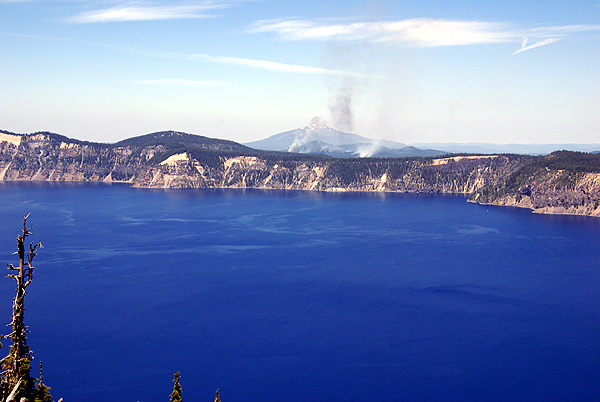
When we visited Lassen last month and also when we visited Crater Lake last summer, there were prescribed burns happening in the parks. Over the course of the last hundred years or so, we've had a policy within our country of any fire being bad, and so therefore the fire was suppressed almost immediately. I can remember reading back in the early 1970s about forest fire management and how prescribed burns were now being applied to areas to get the forest back to where it should have been all along.
Clues that helped fire management personnel figure things out were burn scars on the bark of Giant Sequoias and other trees. This indicated that the big trees had survived many fires in the past. However, after many of the trees were protected within national and state parks fires were suppressed in order to protect these same trees. Park rangers were unaware at the time that they were doing more harm than good to the forests.
My family took my camping all over the western United States during the 60s and 70s. I grew up thinking that forests were deep and dark and very difficult to traverse except on trails due to the heavy underbrush and the think canopy of trees. Very little light penetrated to the forest floor, so very few plants grew. Many forest had uniform thick trees due to all of them sprouting around the same time.
Eventually, fire management teams realized that fire is a good thing for a forest. It clears out much of the over accumulation of pine needles and other forest duff that accumulates over the years. 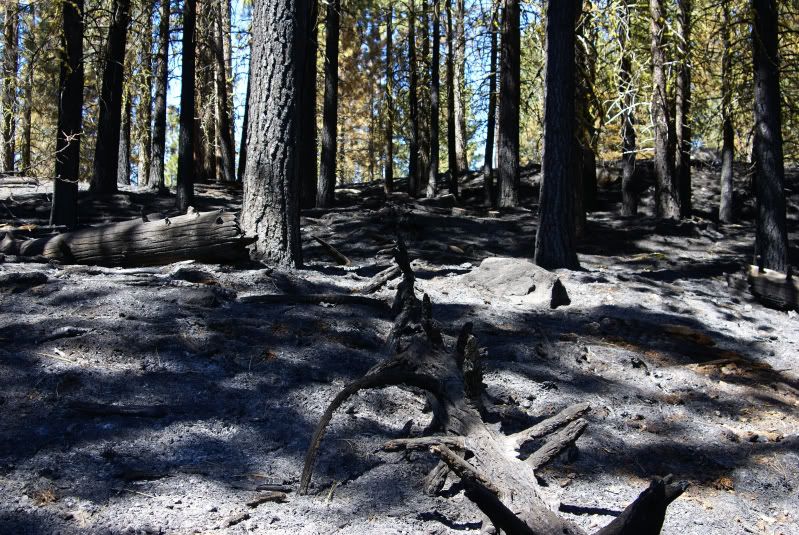
This is what happened in September 1988 in Yellowstone National Park. Several small, lightning started fires were allowed to burn. Then, the fires got out of control and much of Yellowstone burned. The fires probably helped in the long run, but it was a catastrophe at the time. I had visited the park in 1987 and I remember watching the fires come ominously close to many of the places I had been barely a year previously. It was a very sobering sight to say the least.
In Southern California, we have an entirely different ecosystem, with many bushes and a lot less trees. When we get fires, they tend to get ugly very early. We haven't had a fire in the foothills behind our house in about 7 years. I've hidden a geocache puzzle up in those hills, which was originally entitled The Dead Forest? mainly because there was very little vegetation up there following those fires, yet the question mark at the end held out for the promise of new growth. The cache is now called Cobol Canyon Cache, because the forest is definitely not dead any longer. Whether prescribed burns would work in this area is another story. If the area wasn't so urban, it probably would. Saving houses adds another layer of complexity to fire management.
The prescribed burn in Lassen was right along the Manzanita Lake trail. The fire wasn't very big, but then again, most forest fires, if they're actually allowed to burn naturally, shouldn't be that big. They're usually just enough to burn the lower branches and the pine needles without scorching the land. 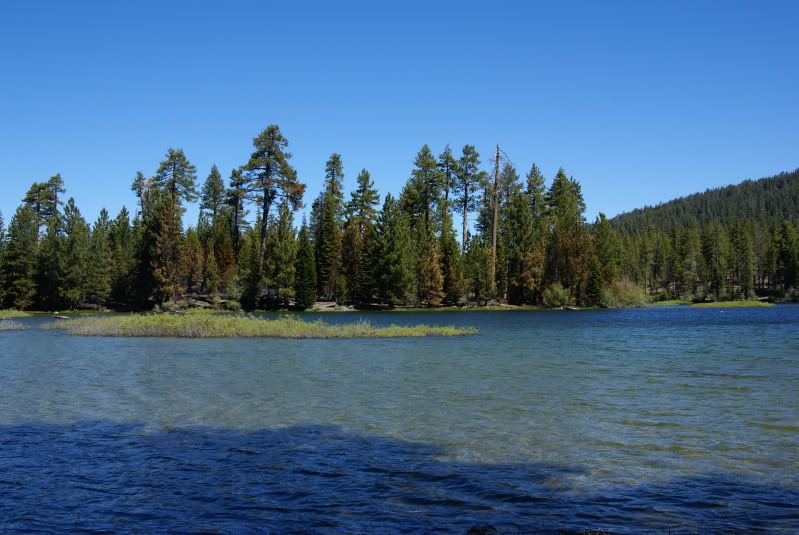
Yet here we were, walking along a trail, with little areas slowly burning. I spotted a couple of spots where I could see some tongues of flame, but none of the pictures came out where you could even see the flame. The burn had worked its way down to the lake edge. Because there was little to no breeze blowing, no hot embers were flying through the air. The fire would eventually die at the water's edge having cleared out a small patch of forest to regenerate. In fact, as we got over to the other side of the lake, I ended up taking a picture across the lake at the prescribed burn. I think most people would be hard pressed to even figure out what part was actually burning.
Yosemite National Park actually has/had a small demonstration forest in their Wawona Big tree grove to show the differences between the two different types of environments. The Wawona grove is a two tiered grove of trees, so it's easy to demarcate the boundaries and show the differences. The upper grove, which had been burned through by several prescribed burns over the course of several seasons, had lots of small bushes and grasses growing throughout. The trees were widely spaced, giving the grove a light airy feel to it. It was very easy to walk through this grove.
The lower grove had trees packed closely together and it was very dark, with very little sunlight reaching the forest floor. 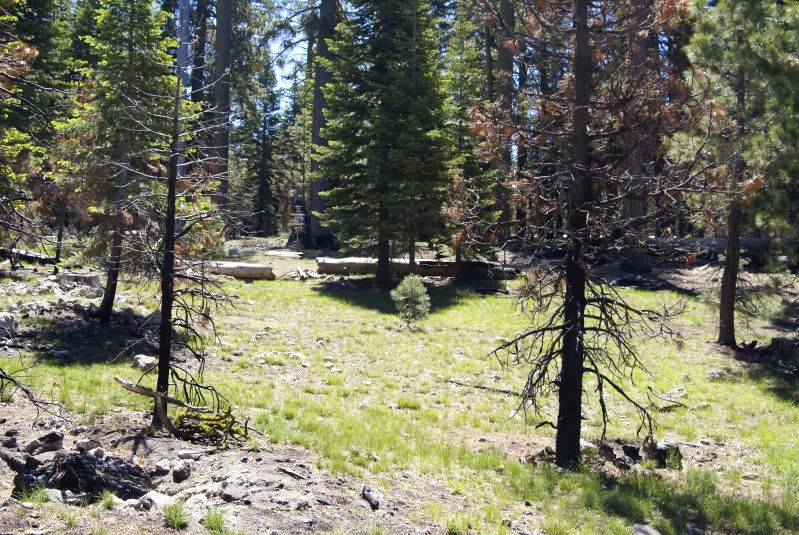
The prescribed burns keep that fuel down, taking the forest back to the way nature intended. At least that's the hope. Only time will tell whether this way of managing the forests is any better than the total fire suppression we had in the early part of last century. As it is, we still get major fires, but I think the hope is eventually, we'll not have to be so aggressive in fighting fires and allow them to burn out naturally. That will make for an better forest for all of us to enjoy.
On a side note, the National Park Service celebrates its 94th birthday today.
Pictures were taken at or near the following geocaches:
Pumice Castle and the Old Man of the Lake - by 47Dad47, KollyWobbels, Sally, and Russ
Loomis - by 2dogs and mtnsteve

Friday, July 16, 2010
A tree grows in Brooklyn
Well, the tree doesn't really grow in Brooklyn, but actually grows on the top of Devils Postpile. The first time I was at Devils Postpile, we climbed up to the top of the postpile. 
10 years ago, I took all three kids camping in Yosemite National Park. On one of our hikes, we hiked up to the top of Vernal Fall. The hike is strenuous, with lots of stair steps rocks to negotiate. There is a guardrail along that part of the trail, and once you get to the top, the guardrail had a screen wire grate along the bottom portion of the rail to prevent anyone from slipping out and falling over the waterfall. The viewpoint is right on the edge of the waterfall as you can see by the picture.
The Tadpole, at the time was four years old and when we climbed to the top of the fall, he dutifully held my hand, mainly for safety, but also because he wanted to feel the support of Dad as he made his ascent. It was at the top when all hell almost broke loose. In every parent's worst nightmare, he broke free of my hand, just as we crested the trail and the viewpoint. I hadn't seen the wire mesh grate, but even if I had, I probably would have freaked a little bit. Because I didn't see the wire mesh, needless to say I freaked a lot. Suffice to say, nothing happened that day and the Tadpole is still around, as am I.
One of the things I noticed about the Tadpole on this past trip was his willingness to just take over things that I normally did when we camped. He decided to be in charge of the food storage box. In California, most campgrounds in bear country are outfitted with metal storage lockers to prevent bears from raiding your supplies and also to keep bears away from populated areas. Bears that feed on people food, as opposed to what they're supposed to be eating isn't good for either bears or people. 
I think I might have been more nervous on the top of Devils Postpile back then had we gone there. There is no guardrail and not anything to remind people of a steep drop. Everyone knows it's there. I didn't even think twice about walking around up there nor did I worry about the Tadpole. His maturity, at almost 15 now, is showing big time and he's turning into that responsible young man that we all hope our sons turn into when they reach that age.
One of the things that I wanted to show the Tadpole at the top was a small tree. I'd photographed this tree back in 1977. As you may have noticed if you're a regular reader, I enjoy seeing the struggles of like, especially when plants grow where you don't think they should grow. The tree that used to grow on the top of Sentinel Dome is one good example. When I took that photo, I figured this tree might be something along that line and I hoped that someday I might get back to see it. As you can see, the tree hasn't grown much. By comparing the two pictures, I think it's safe to say there's about a foot of growth on the tree.
I guess I was overly optimistic when we came back this summer. I think I was expecting the tree to be several feet higher. After all, it had 33 years in which to grow. I forgot about where it was growing. 
Still, the tree had grown a little and that was promising. It also showed, that it would be a long time before this little tree towered over anything else in the forest. It has its foothold. Now, hopefully, it will continue to send down roots and continue to thrive. The Jeffrey pine tree on the top of Sentinel Dome is no more, but it lived a good long life and never got more than about 12 feet tall at best. The living conditions up there were probably harsher. I have hopes for this little tree.
Pictures were taken at or near the following geocaches:
Mist Trail Cache - by V-man
Devils Postpile Glacial Polish - by TerryDad2

Thursday, April 22, 2010
Spring is starting to spring
In Southern California, we seem to be having a delayed spring this year. 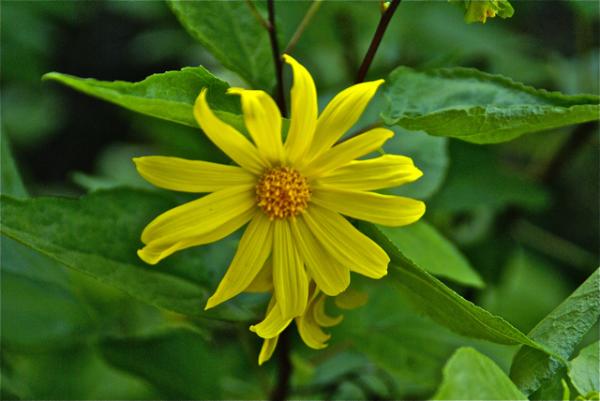
We've had some warm spring days, but we've also had some unseasonably cold days mixed i there as well. The overnight low yesterday was 39˚. For Southern California, I can tell you, that's a Three Dog Night. The cold has kept some of the flowers under wraps a little bit longer than usual, although some were making an appearance last weekend when we were out in the desert. I don't think the peak of flower production has hit yet, although it seems close.
Getting back to seasons. I think in Southern California, summer starts in late June and continues well into September, when it starts to cool down. "Real" fall, happens usually in December. The deciduous trees need that nice cold weather which we don't really get until after Thanksgiving for them to drop their leaves. Winter is our rainy season from December to March, but this year, it's obviously leaked into April. Spring happens anytime between February to June, depending upon the amount of rain. We actually get a second flowering season in the fall as well after we get some monsoonal rain during August. 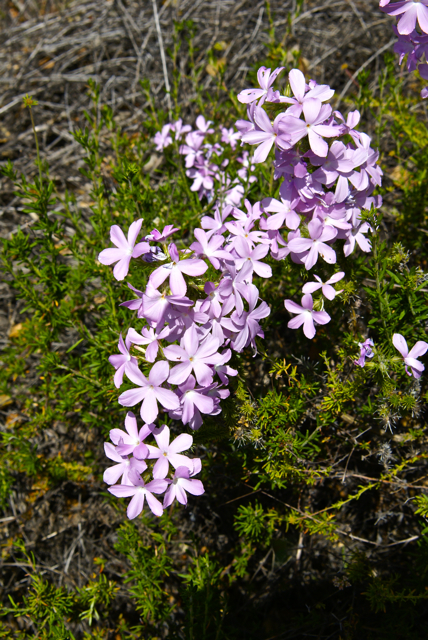
With really wet winters, and this is above average (slightly above 20 inches of precipitation with 15 inches being "normal"), although not extreme, we'll expect to see more and more flowers, which will bloom and die quickly once the heat starts in. Seeds will be spread everywhere and next year might even bring a bigger explosion of color. Hiking on the trails right now should be very enjoyable. They'll be dry in a couple of days and the flowers should be just about right. It's a good time to be out and about.
Pictures were taken at or near the following geocaches:
BIG BURL - by Big Eagle
The Pit Stop - by Dah Mooser and MsPea

Thursday, April 8, 2010
Black birds, barrels and butterflies
For the most part, the desert seems to be a pretty barren place. When one thinks of the desert, usually one thinks of drifting dunes, camels and not much life. 

Pictures were taken at or near the following geocaches:
Groundspeak Series - Stealth - by HDGC
Groundspeak Series - Lifeline - by HDGC

Sunday, December 13, 2009
Soledad Canyon
Driving through Soledad Canyon last weekend was an enjoyable experience for a variety of reasons. The canyon runs basically eastward from the 14 freeway toward Acton, California. As one nears Acton, the road starts to bend towards the northeast and continues that direction until it connects back up with the 14 freeway as it makes its way north toward Palmdale and Lancaster. 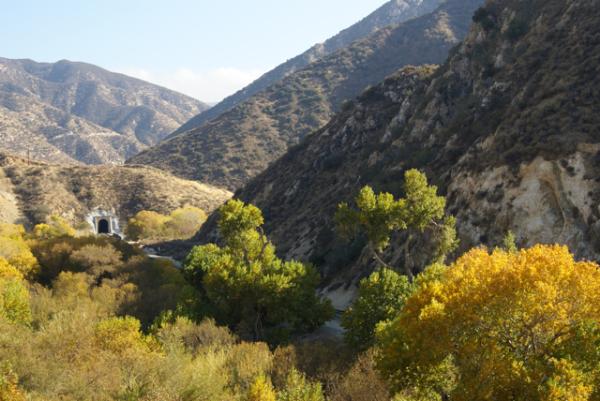
An active railroad right of way also runs parallel with the canyon road through the canyon. There were several caches along the road that had train themes to it, including a tunnel view cache. We heard and saw two trains go through the canyon while we were caching, but unfortunately, we were not in a good position to get decent pictures of either one. In fact, we missed a trail going through the tunnel view cache by a matter of five minutes. We kept hoping to see another train, and we eventually did, but the cache we happened to be near at the time didn't put us in a good position to train spot. Sometimes caching is like that and we accepted it.
The seasons in Southern California are relatively delayed as opposed to other areas of the country. We actually have two big blooming seasons, one in the springtime and one in the fall. Our fall colors (what we have of fall colors) usually happen in late November/early December lasting into the new year. It's finally getting cold enough at night that the trees are starting to drop their leaves in force. 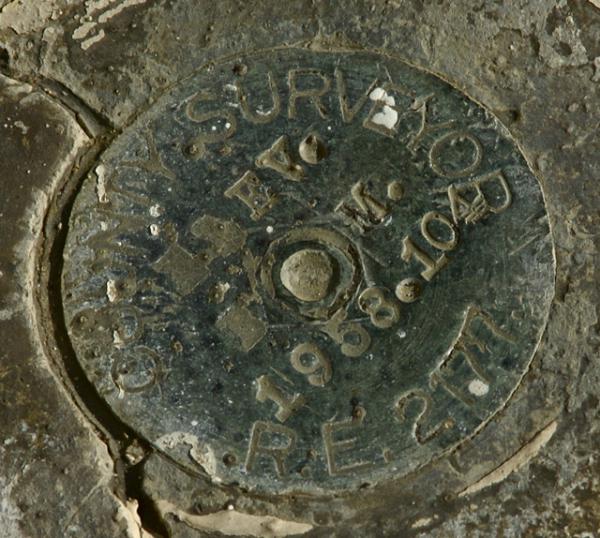
The road we traveled on had several old bridges on it. We were in a canyon, so we crossed Soledad Creek several times and also crisscrossed the railroad tracks in certain areas as well. I kept looking for benchmarks along the way and I found a couple, but nothing that was in the geocaching benchmark system to log. With the railroad tracks in play in the canyon, we both suspected that the benchmarks were probably tied to the tracks in some way and after getting home and doing a little bit of investigating, it became obvious that many of the benchmarks in the canyon were indeed along the tracks and not along the roadway.
The bridges we did cross were old enough they were dated. I can remember growing up, the sidewalks had dates on them in several places. The company that poured the cement would put some free advertising into the sidewalk along with the date the sidewalk had been poured. I hadn't seen this type of dating in a long time, as the other areas I've lived in were newer neighborhoods and the practice seems to have been abandoned over time for some reason. 
Bridges seem to have this same kind of dating system too. The company that built the bridge didn't put their name on the bridge, but at least a date could be seen on several of the one we crossed. One appeared to have been replaced as the bridge itself looked to be of a newer type of bridge, but the piers on which the bridge rests seemed to be the original pilings. Again, I found a benchmark near this one, but it was a small one and not listed in the system. The one that was listed in the system near this spot, was down on the railroad tracks. And so it goes sometimes when you're looking for benchmarks.
As I noted in one of my previous logs, the road was busy last week. There was an accident on the 14, so there were lots of cars using the canyon road as an alternate route to get around the backup on the freeway. Since we didn't get all of the caches in the canyon, we plan to go back in the future. Hopefully, the road will be a little more peaceful.
Pictures were taken at or near the following geocaches:
Train Tunnel View - by Yosemite John and Debbie
Thirties Train Tunnel - by Yosemite John and Debbie
Bridge to Shambala - by Yosemite John and Debbie

Sunday, December 6, 2009
Mushrooms
Hiking in the Redwoods is usually an enjoyable experience. Most of the time when Chaosmanor and I were hiking, I kept thinking about the Lord of the Rings books by J.R.R. Tolkien. 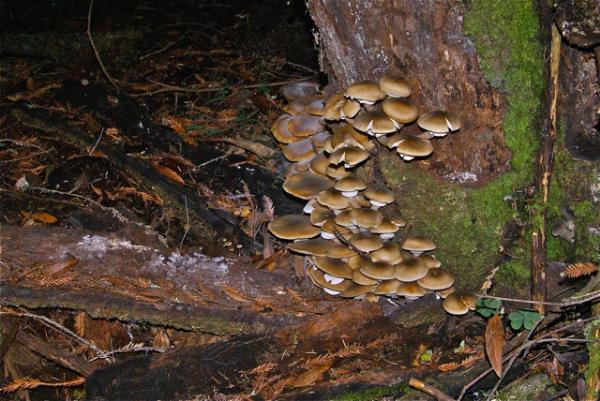
When we were hiking, there were signs announcing that it was mushroom season and apparently, there were lots of people who harvested them. I'm not an expert on mushrooms, so I'll partake of ones that I can purchase in my local grocery store. I can also remember my first college roommate harvesting mushrooms but for an entirely different purpose. We went to school at Humboldt State University and the area had lots of mushrooms, including several psychedelic "shrooms." To each his own, but at that time I didn't understand the attraction of mind altering substances, nor do I really understand the need to partake of any today.
I prefer to look at plants for their intrinsic beauty. Yes, I believe even mushrooms have an aesthetic value to them. These were just some of the ones we saw along the trail while on our hike north of Santa Cruz. Interestingly, although there were signs announcing mushroom season, we saw very little evidence that the locals were harvesting the mushrooms. 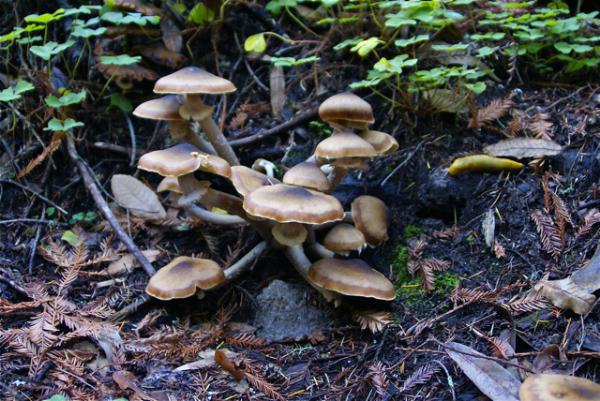
Yes, I know they are part of the decomposition needed in the forest and although they usually don't work very well on Redwoods per sé, since redwood trees have so much tannin in them that they decompose at a very slow rate. The fungi does help improve the soil by helping decompose other plants that have died. The one picture I really enjoyed was the one that included the banana slug. I hadn't even noticed the slug until after I got home and downloaded the picture on to my computer. As a size perspective, I figure that banana slug was about 6 inches in length.
I'm not sure where this one is going. I actually just wanted to share some of the pics from that hike and figured this would make a decent subject. Please enjoy.
Pictures were taken at or near the following geocaches:
Rising Stump Cache - by Chickasaw of ynots4
Down By The (Fall) Creek - by iwikepie and company

Monday, June 15, 2009
Lamp Post Flora
Sometimes, I end up finding lamp post caches. It doesn't happen that often and usually I don't have a lot to say about them, since they seem to be so pervasive in an urban area and usually pretty routine. One lamp post cache find did catch my eye, not because it was different, but because of the experience. Last Saturday was my first full day of vacation, so I figured what better way to spend it than to 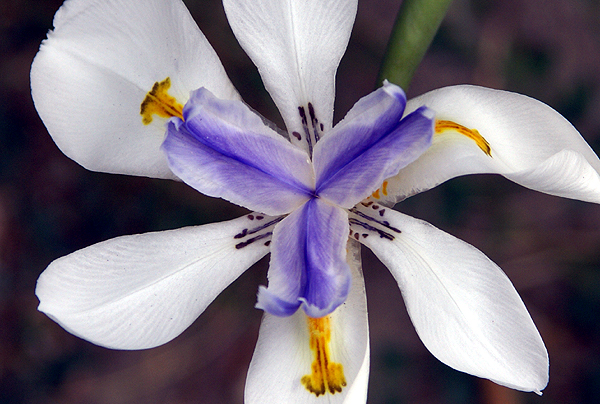
We met over near a park and ride off of the 118 Simi Valley Freeway, otherwise known as the Ronald Reagan Freeway. We've utilized this particular park and ride in the past and we both commented that it was surprising there wasn't a cache hidden in it since it's a large area, with several landscaped areas that could hold a small cache (not a micro as I don't hide micros). I even came up with a clever name for it should we decide to come here again as a base camp.
This particular park and ride is literally under a transition road for the freeway and so the geocache map would be interesting, making it look like the cache could be in the middle of the freeway, depending upon placement. It's probably because of the proximity to the freeway that there hasn't been a cache placed there. It is pretty noisy and not the most scenic spot in the world, but then again, there are quite a few caches that fit that description.
Which leads me to this lamp post cache we found after we'd dropped off Chaosmanor's car at the park and ride. This was our second cache of the day. We weren't sure what the cache was going to be when we first got there. That's often the case when you run a circle PQ for an area. You go out and you find caches. Some are interesting and some are...well, let's just say they're not as interesting as others.
As we pulled into the parking lot both our GPSrs were pointing at this particular lamp post, so I slowly approached it in the car, looking around to see where the 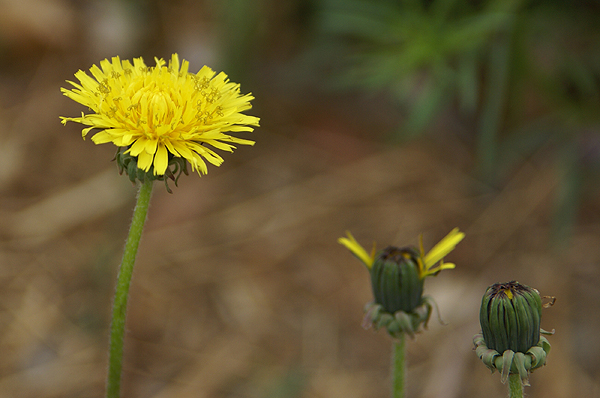
I'm not sure this time it worked very well, because the muggle just seemed to be interested in me and Chaosmanor for the longest time as she sat in her car. Perhaps she was wondering what two middle aged men were doing walking around in the planter looking at various weeds and other plants, but eventually she got tired of it and got out of her car and went inside the store. However, there were other muggles about as well, so we had to wait them out. I think this was the first time where I had more trouble replacing the cache than in retrieving the cache because of muggles.
We eventually got the cache replaced when I spied some clover growing near another lamp post further down. This particular clover was immense. The bud was at least quarter in diameter if not bigger. Most of the clover I've seen in lawns in this area are usually small white balls of little flowers. This purple bunch really took me by surprise. Couple that with the other pictures I took of the iris and the dandelion and 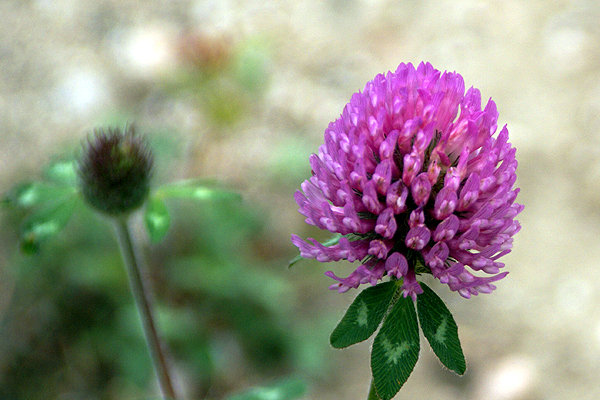
I guess I really need to thank the muggles though. Had they not been there in force, we'd probably have been in and out very quickly and we would have missed these little highlights. Eh. It's a weed some people might say. Yeah, it's a weed, but it made for an interesting picture, so I'll take that weed any day of the week. I still don't particularly like to find a lot of lamp post caches, but I'm pretty sure that I'll look at them slightly differently in the future because of this experience I had with them on Saturday. And that's what it's all about really, enjoying the experience.
Pictures were taken at or near the following geocache:
Greens - by shirconn

Tuesday, April 15, 2008
Foxtails, Foothills and Flora
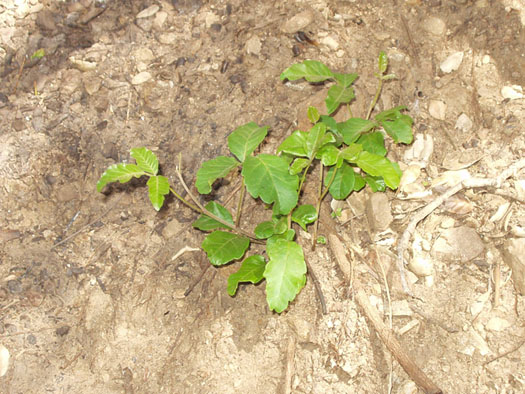
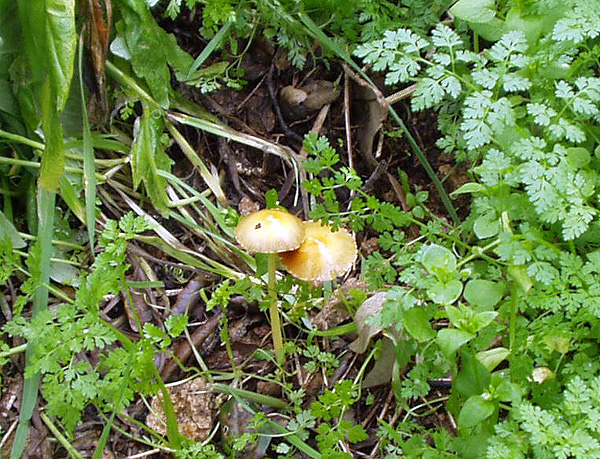
Most of my articles seem to be inspired by the pictures in my gallery, and this one is no exception. Earlier, I posted about animals that I’ve encountered while hiking and caching. I guess it’s about time I wrote about the plant side of hiking as well. Animals get more notice, because outside of the bu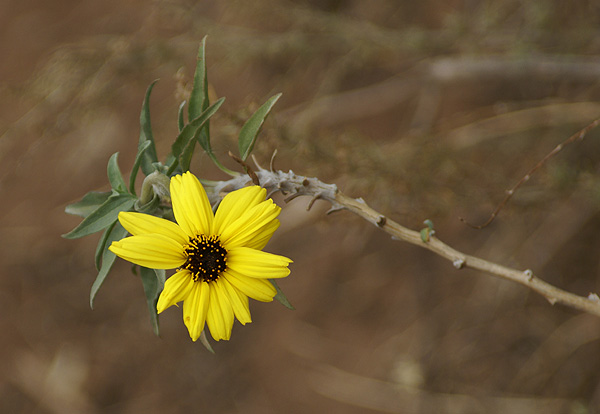

Oak Trail - by Lab Rat
Hermosa Falls - by Team Chloe
CV Trail #3 - by BrianK124 & Tomahawk chop shop
Mountain's Majesty - by Mandy's Mom
Cucamonga Creek - by Team CEREO

